Monthly Archives: February 2010

J & P style Custom Basses

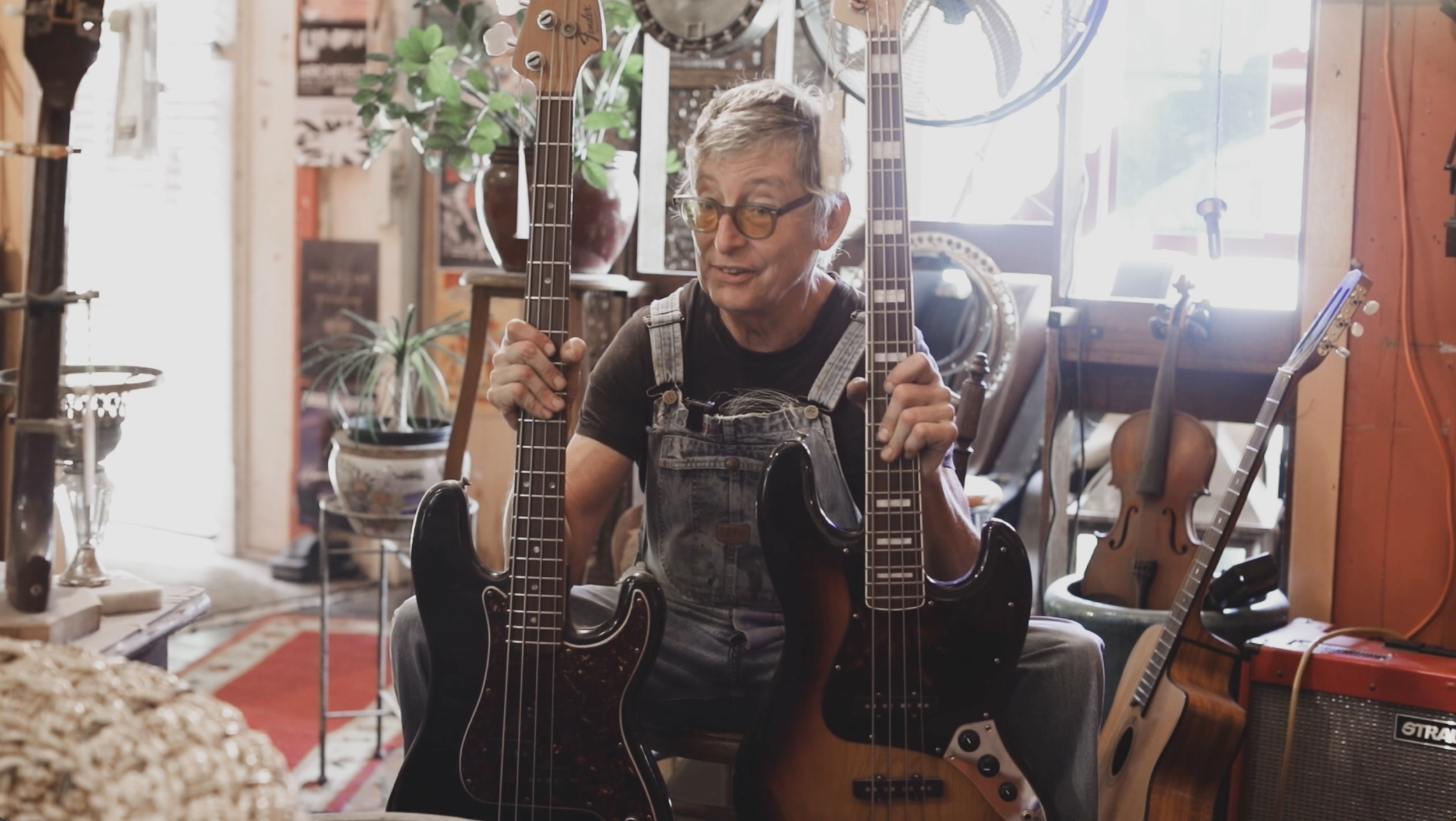
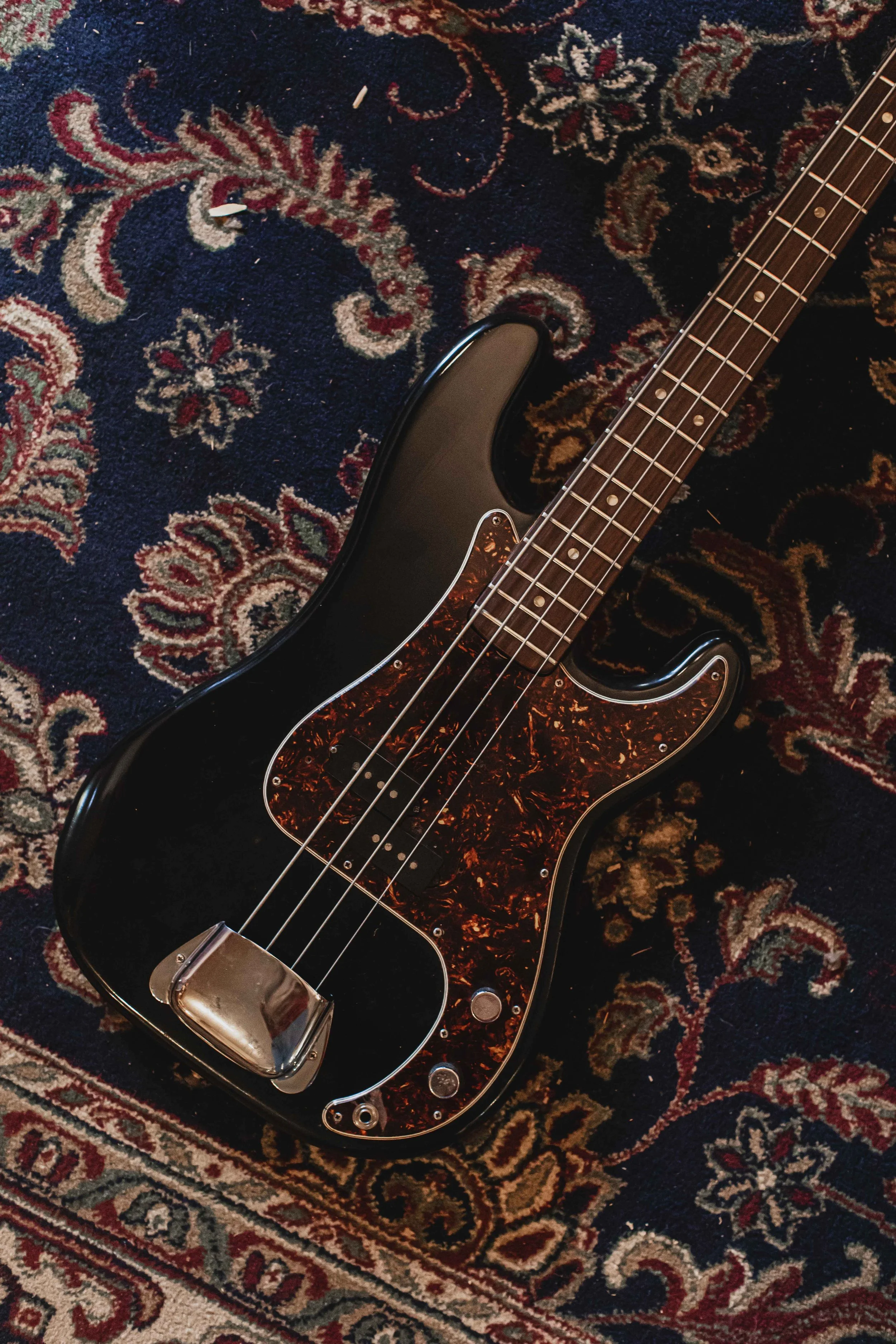
We decided to give you a selection of various custom basses made to the needs and desires of our customers. These basses all feature 2 piece light swamp ash bodies with Canadian maple necks with the option of Maple fingerboard or East Indian Rosewood fingerboards. Ebony is a further option. The choice of pick ups is up to the individual. Prices for these basses range from 1500.00 up to 3000.00 depending on finish, electronics etc.

2006_11220020 More coming soon

Brazilian Bloodwood Nuts and Saddles

Disclaimer. The views expressed below are my views (Uncle Johnson). We will quite happily make you a nut and/or saddle in any material you like with the exception of compressed bat guana,

dscf8132_rs For the last few years I have been trying to find alternative materials for making nuts and saddles. The traditional materials such as bone and brass have been proven over time and the more widely used modern materials such as Corian, Micata and Tusq are also very good……So why do I want to re invent the wheel? Because…….

1. Bone makes the work shop smell like an industrial dentist’s surgery when shaped and sanded. I also find it very difficult to get a regular supply of consistently hard, non porous bone. The tone can sometimes be a little too bright and even bit harsh depending on the application, and lastly it can be quiet “sticky” when used to make a nut, thereby causing strings to “click” or “creak”. This can affect the tuneability and tuning stability of the instrument.

2. Brass attracts heat and burns my poor little fingers when I’m shaping it. I like it in certain applications and in some cases, as with bone I will recommend it. However, like bone it is quiet “sticky”.
3. Corian, Tusq and Micata are all wonderful materials, however I get a little worried for my health (not to mention my staff) when shaping it, as all these composite products smell kinda toxic.

Right then, this is what I had to ask myself.

1.The “new” material has to be super, super resonant.
2.The “new” material has to be hard as buggery and super long wearing
3.The “new” material slippery enough to allow easy string travel.
4.The “new” material has to be consistent
5.The “new” material has to be easy to shape
6.The “new” material has to make my workshop smell good and be, within reason, non toxic.
7.Lastly, it has to look good and make my clients happy so they keep coming back to me.

The material (Blood Wood) is an exotic timber from Brazil which has only become available in Australia in the last 12 months. Hearing is believing. Everyone of us in the workshop is amazed by this discovery. It has taken 3 years of experimenting to find it, however it has been worthwhile.

The “other” discovery we found is that by laminating the blood wood with ivory (slips) taken from the keys of donor pianos we get a gorgeous look nut or saddle with the combined benefits of both materials.

Woodie Guitar Stands

dscf8216_rs How could we resist these little wonders. They are very durable, very compact, and best of all they look fantastic. Yours for 35.00 and just to really add that final touch we can stain it for you in a myriad of different colours for an extra 15.00

Compensated Nuts

dscf8246_rs Ever driven yourself insane trying to get the open chords of your guitar to all play in tune and then once you’ve found an acceptable compromise you find the bar chord suck ass? Well this can help. When you look at your guitar, do you notice that the bridge saddle/s are further away from the neck on the bass side and closer to the neck on the treble side? This is called compensation and it is designed to compensate for the thickness of the strings so that they are as close to being a perfect octave at the 12th fret. The 1000,000.00 question is how do you get them to be in perfect pitch over the rest of the finger board? Answer. You can’t, OR…….you can if you intend having individually calibrated frets for each string (that’s roughly 132 mini fret lengths). And that isn’t easy to do, although I really would love to try one day. Now having said this, I would be remiss if I didn’t point out that a little bit of dissonance is not a bad thing in any musical instrument, because without dissonance you would not have tone (wanna know more? Please ask). Now back to the compensated nut. It works in the same way as the bridge saddle/s, only it does it from the other end. Now there has been an upsurge of interest in this type the nut mainly through the marketing of several companies claiming to have virtually invented it themselves. Sorry fellas, no disrespect but luthiers going back as far as the 17th century were applying the same idea to gut stringed instruments. Musicman and ESP also have this concept on many of their guitars. The nut is especially useful for those folks who like to use a capo and also you metal heads who love nothing more than a guitar tuned down to B. The average price of this modification is 75.00 and for many it will be money well spent.

Canora Fretless Bass

dscf8235_rs We’ve seen lots and lots of fretless basses over the years and we’ve also de fretted a lot of basses too. That said, we’ve never heard anything like this guy. You have to hear it to believe it……Example. You pluck the string, the strings sounds and then fades right? Not on this bad boy…. Pluck the string and it actually increases in volume before slowly fading! It’s a bit like having a natural compressor/limiter built in to the bass. Oh! Before I forget, this is a passive bass. No tricks just pure tone. Built in 1980 by the same folks that bought you Ibanez, it sports maple laminate neck thru construction with mahogany wings. All set up and ready to go.

Voxtron Bass

dscf8226_rs This piece of Japanese Kitsch is so playable that it is hard to put her down. The tone is what you would expect from this style of bass. Big fat woody low end with lovely upper mids. The kind of bass that will be perfect for dub reggae or acid fueled prog.The neck has a cozy 32” scale. We have completely re furbished her and that included a re fret. The strings are Black nylon “tape wounds” or as we like to call them “Disco Strings” …don’t ask me why that is, it just is OK!

The Wonders of Vintage Japanese Guitars

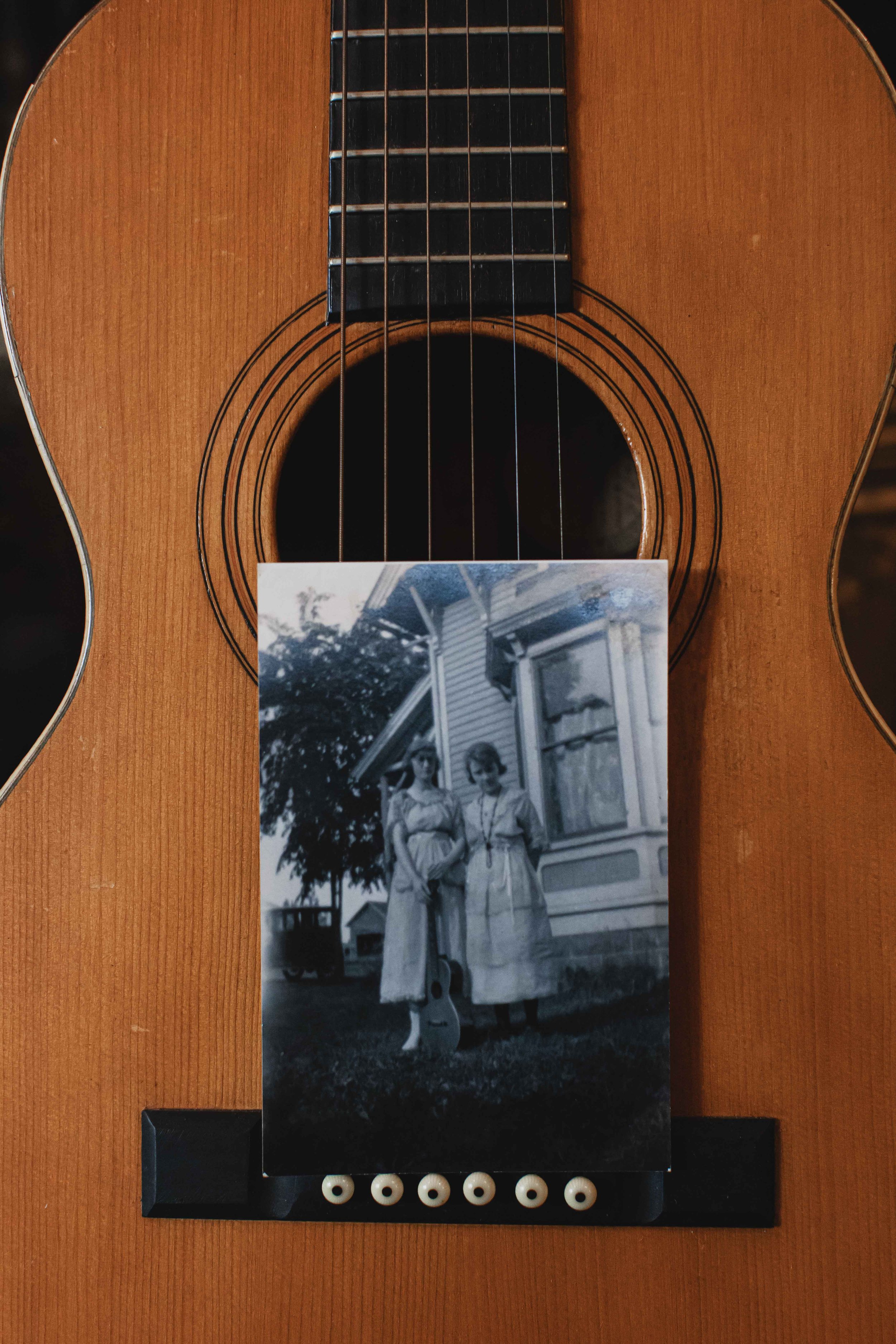
There are sooo many old Japanese acoustic guitars out there. Some are lying under beds, some have been bequeathed to younger members of the family and sadly, way too many will eventually end up at the dump. We love nothing more than to get our hands on these under appreciated beauties. Why? I hear you say. Well, it’s like this.

1. Build Quality. The Japanese were for many years the masters of replicating everything from cars to guitars. Their attention to detail was nad still is meticulous, especially when it came to copying and replicating American guitar design.

2. Materials. The timbers used to make these guitars were sourced from every corner of South East Asia. These timbers were “old growth”; in plainer words, the timber was taken from established forests. The advantages of this type of wood are long term stability and strength. Further to this, many of these timbers were species that are now on the endangered list and are therefore illegal to log and/or export. Now, while we consider the cutting down of established “old growth” forest timber a crime, it would be an even bigger crime not to make the most of what is already there. Whilst the build quality of the modern Asian made guitar (i.e. China, Indonesia, Vietnam etc) is exceptional, most of the timbers used are “plantation” timbers or more overly “new growth” timbers. Though this forestation is certainly light years ahead ecologically, it tends to yield timber which is brittle and can be unstable, making many repairs, such as a broken headstock untenable.

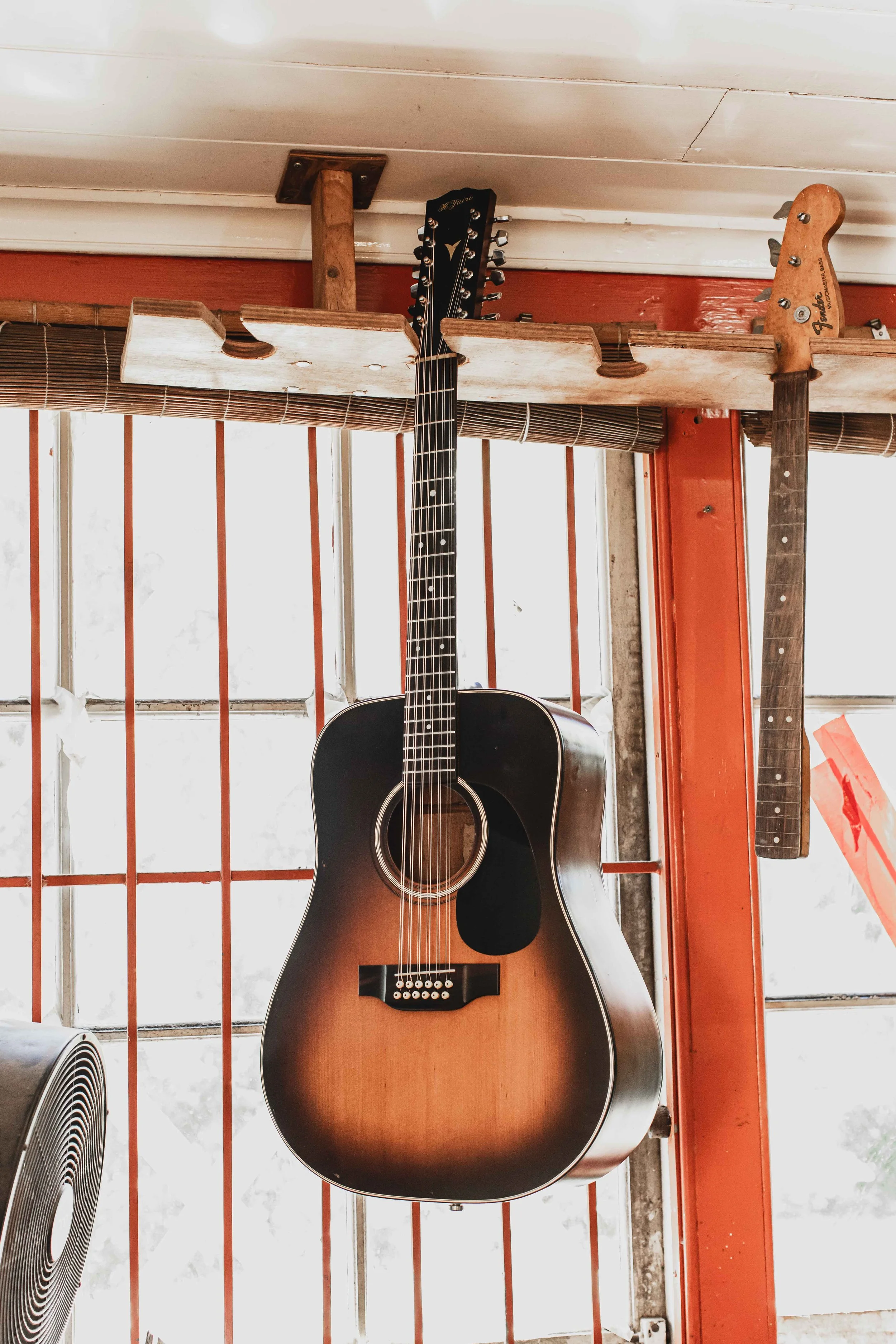
The moral of this story is simple, if you have an old Terada, Yamaha, Ibanez, Suzuki, Yairi, Tokai, Takamine, Emperador, Morris, Pearl or Tama (yes! they made guitars to) just to name a few, you probably have a guitar that given the right bit of TLC will wipe the floor with most of its modern competitors, including those beautiful guitars that cost $2000.00 plus. Ok Then, enough of my yacking, enjoy the pictures.

BEFORE

AFTER

Guitar Repairs Mandolin Made by Kallquist Guitars

dscf7327 This is our very own Handmade GTR Mandolin made by Kallquist Guitars. Back, sides and neck are rose mahogany cut from old VJ’s used once in a Presbytery in Kerry. soundboard and braces are bright spruce from an old German Piano.

“it sounds awesome!, loud, bold full, everything you need in a Mandolin” – Luke Kallquist, 2010

Stay tuned for more in the GTR Line by Kallquist guitars

More Pics coming soon

Handmade Brass Saddle Bridgepieces

Bridge Span Saddle Pieces Up until recently we, like most guitar repair shops replaced bass saddles and telecaster bridge saddles with the best bridge saddles we could find. However I’ve never been that happy with the type of brass used, nor the tone it produced. I researched the historical “why’s” and “where fores” of this and found the most interesting thing. The original brass used by the likes of Fender back in the 50’s was actually a softer compound than that which is available today. This softer brass was cheaper and more available in post war USA owing to the on going rationing in the mineral resources sector. Now here’s another even more interesting thing. The brass “D” mould strips used in old European Piano’s are also a softer type of brass…..Do you see where I’m going here? The softer compound actually gives more sustain, has a woodier, warmer tone and best of all we’re all doing the planet a favour. These saddle sets are on average 140.00 plus fitting

Pastel Blue Vintage T Style

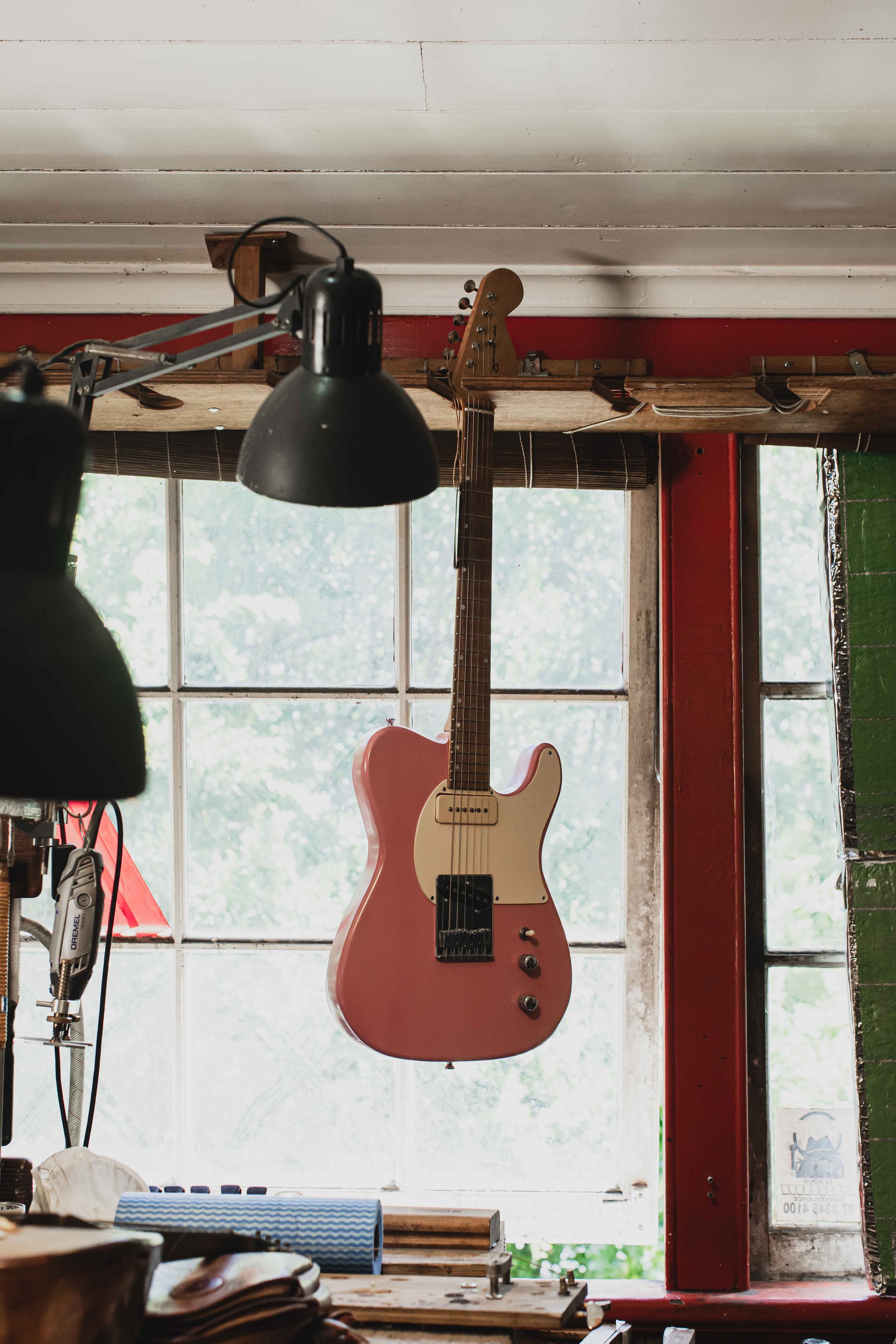
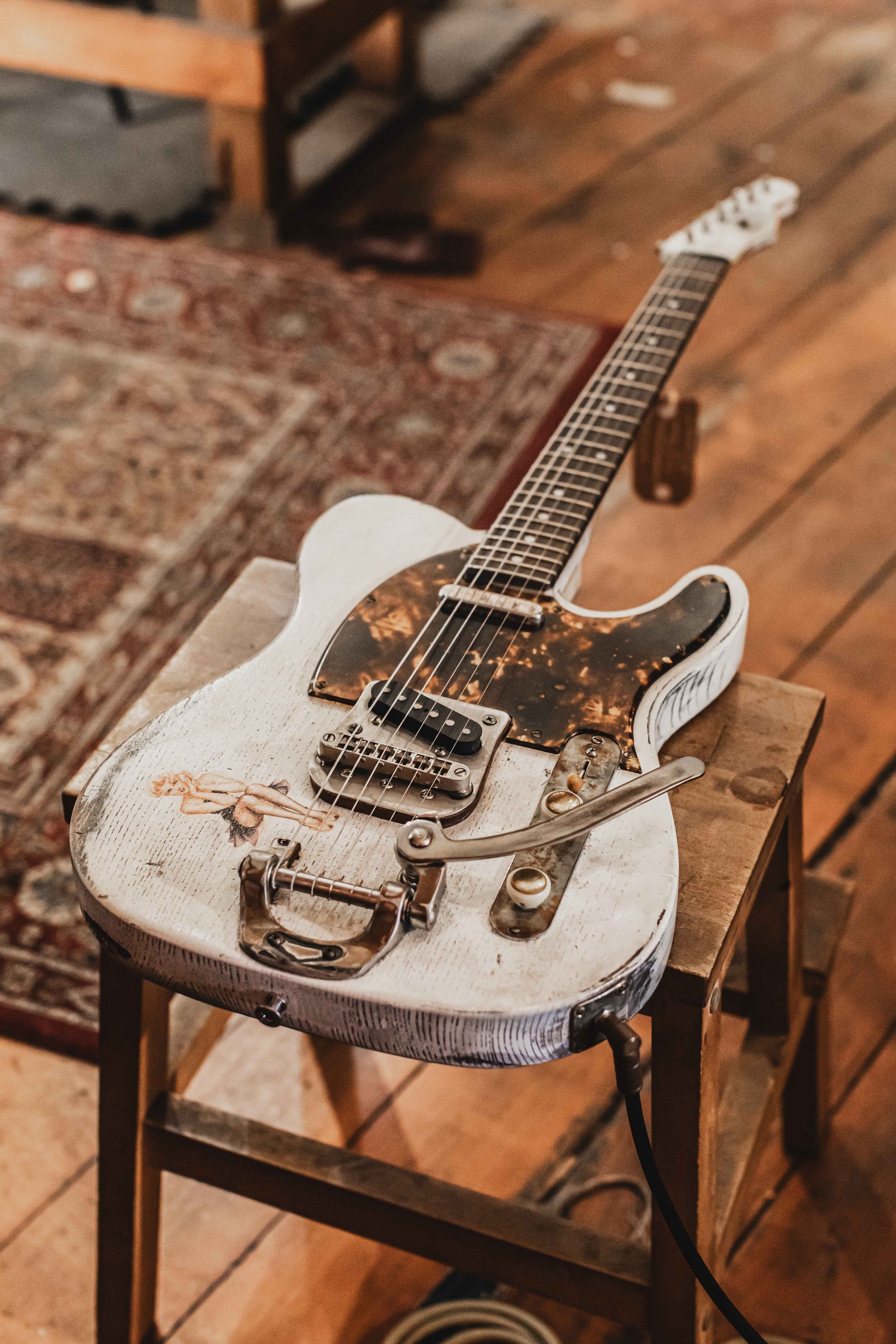
pastel tele shot This is a custom order. Pastel Blue, 2 piece ash body, High output vintage style pick ups, all brass hardware and hand milled brass saddles (check these out in the Unique and exciting products section.). Makes for quite the blues machine. We make these guitars to order starting at around 1500.00

Shop Custom “Wallpaper” T Style

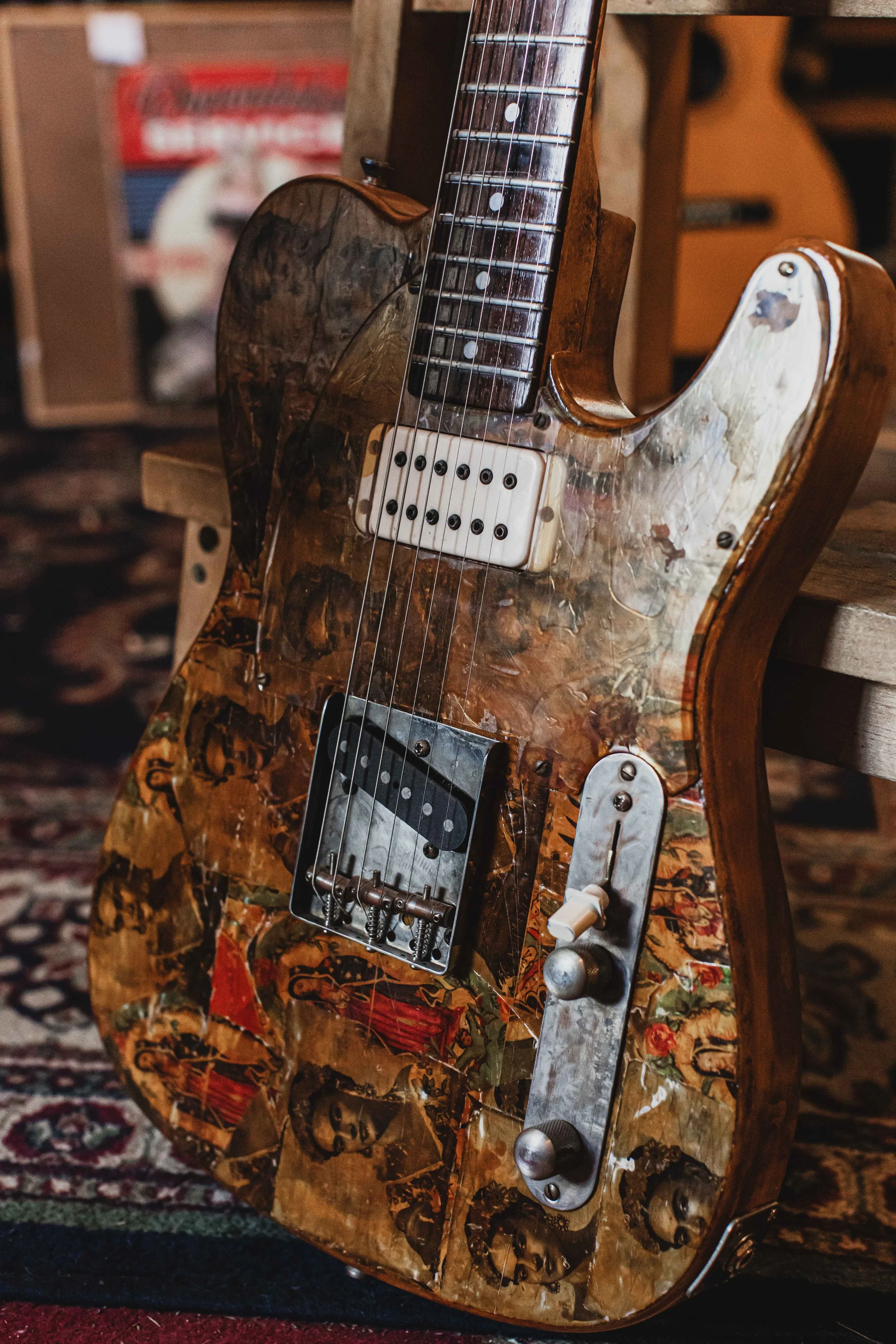
japanese-wallpaper-tele-4_rs This time, we really went for a very “Japanese” vibe. Whaddya think?

Hello! and Welcome to the Guitar Repairers

theguitarrepairerssign Welcome Guitar Geeks, to our humble online abode.

Here you will find the widest range of vintage, restored, repaired, reloved and revived stringed instruments. From 1890 parlor guitars to our brand new Custom Wallpaper Tele’s, we got it all. Check out our Guitars, Banjos, Mando’s, Ukuleles, Basses, Solid Body’s, Hollowbody’s and a wide range of Pencil Crayons. Click the about us pages to see a little of our story so far, our friends page to see who we rub elbows with and of course take a look at all our fancy stringed things. Don’t forget to check out our FAQ section for bunch of answers to common repair questions and our products section to see the vast range of different products and materials that go into making and restoring guitars to top notch condition. and if all this isn’t enough for you then

visit the old site here

Red GT Striped J-Bass

2006_11220036 this is our custom shop Red and White GT Stripe J-Bass. This has an awesome vintage jazz bass sound and suits any playing style.

Shop Custom Wallpaper T Style

dscf6800_rs Ah yes! Yet another in our series of wallpaper “T” style guitars. I think this one is the most bodacious that we’ve produced yet. Just look at it! A lot of people have asked just where do we get our wallpaper from? I’ll let you in on a little secret. The Japanese have always been the masters of fine print product and the “wallpaper” is actually super high grade gift wrap. We have a local supplier who helps us in this area and we invite anyone who is interested to personally check out these prints for themselves. These guitars are made to order starting at 1800.00.


Hagstrom 3 Circa 1961

hagstrom3_rs Now this little baby was a real challenge. You would be amazed at just how much electronics can be jammed into such a small guitar! Those crazy Swedes must have had too much time on their hands. That said….isn’t she just soooo cute. No bigger in size than a Mustang (reg.needed) and a neck so slender that it would put an Ibanez RG reg. needed) to shame. This guitar was built in 1961 by the Hagstrom Company. We have rebuilt her lovingly right down to the Tortoishell scratchplate which was fashioned by young James who is following in the footprints of his forefathers (that’s me and Luke by the way). Oh! And by the way, when we re fretted the neck it was still Gun barrel straight after all these years. I cant even tell you what Scandinavian timbers were used on these guitars, however I would loooove to get my hands on some.  STOP PRESS! Sorry all, Skritch of The Mary Trembles has snatched it……However we will be getting more so let us know if you wish to be in the loop.  Average price for these cuties is 1500.00 inc Case.

Next Page »