Monthly Archives: January 2010

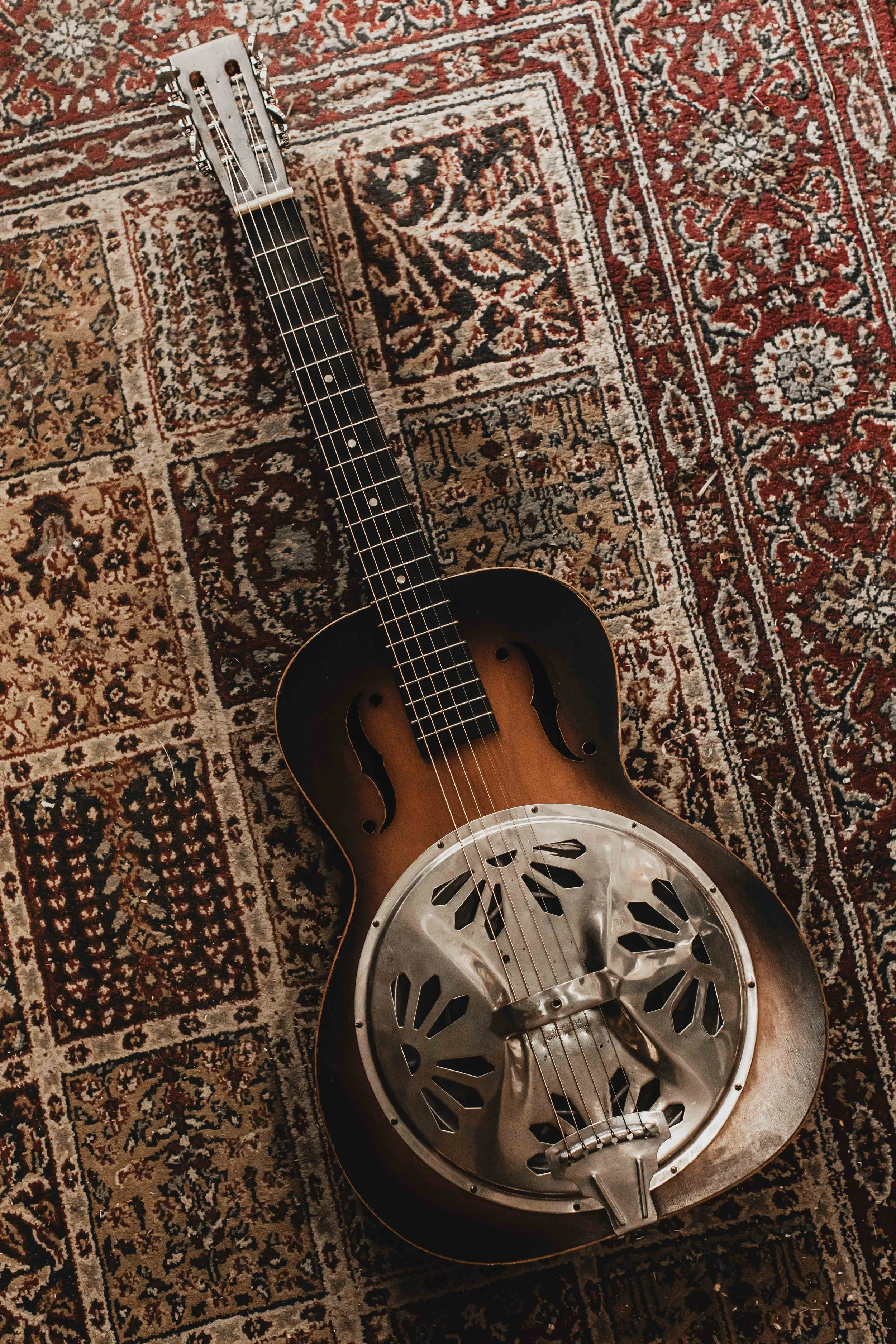
“Notional” Resonator Mandolin

dscf7983_rs This beautiful little creation was crafted by local luthier Dale Riddle. A true artist, he has crafted an all native timbre Mandolin with its own resonator cone! This cross-breed has been one of our favorites to show off for as long as its been here and a sad day it will be when it goes. This mandolin has all the perks of a flat back mando with its loud top end and the tang of the resonator does nothing but complete the short neck scale.

SOLD 

Early 70’s Gibson 345

dscf8140_rs Take your mind back to the decade of 1970; you pick up a brand new Gibson 345. You feel your eyes tear up as your shaking hands struggle to play the newly heard Stairway to Heaven. What a beautiful guitar. Now back to present day; we have that same guitar but with 4 decades worth of vintage value! plus its still in perfect condition. all original parts and components and it sounds as good as it looks.
We have decided its too nice to just look pretty on a wall so we’re selling it at way below market value, only $5500 inc case.

Cherry Blossom Wallpaper Tele

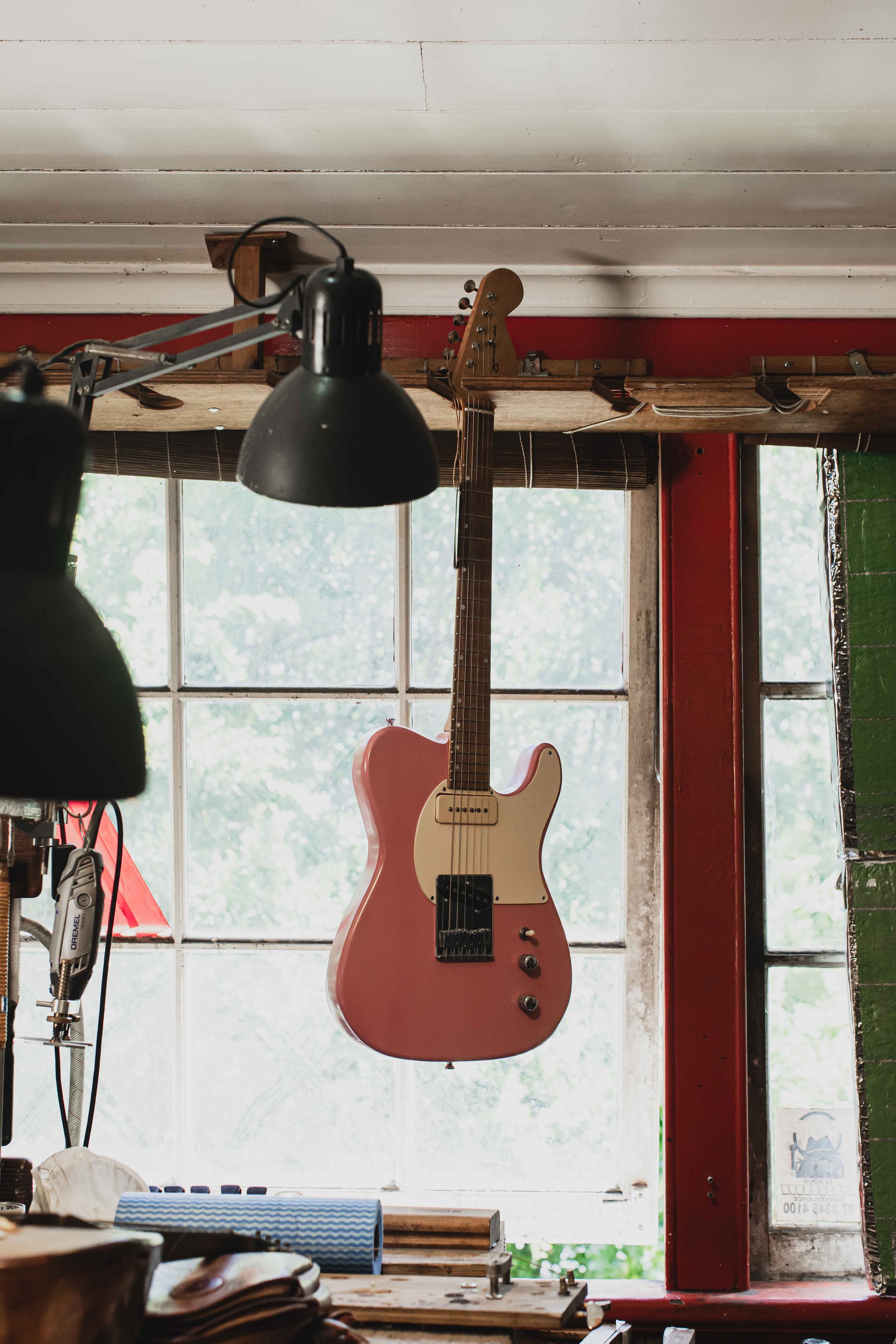
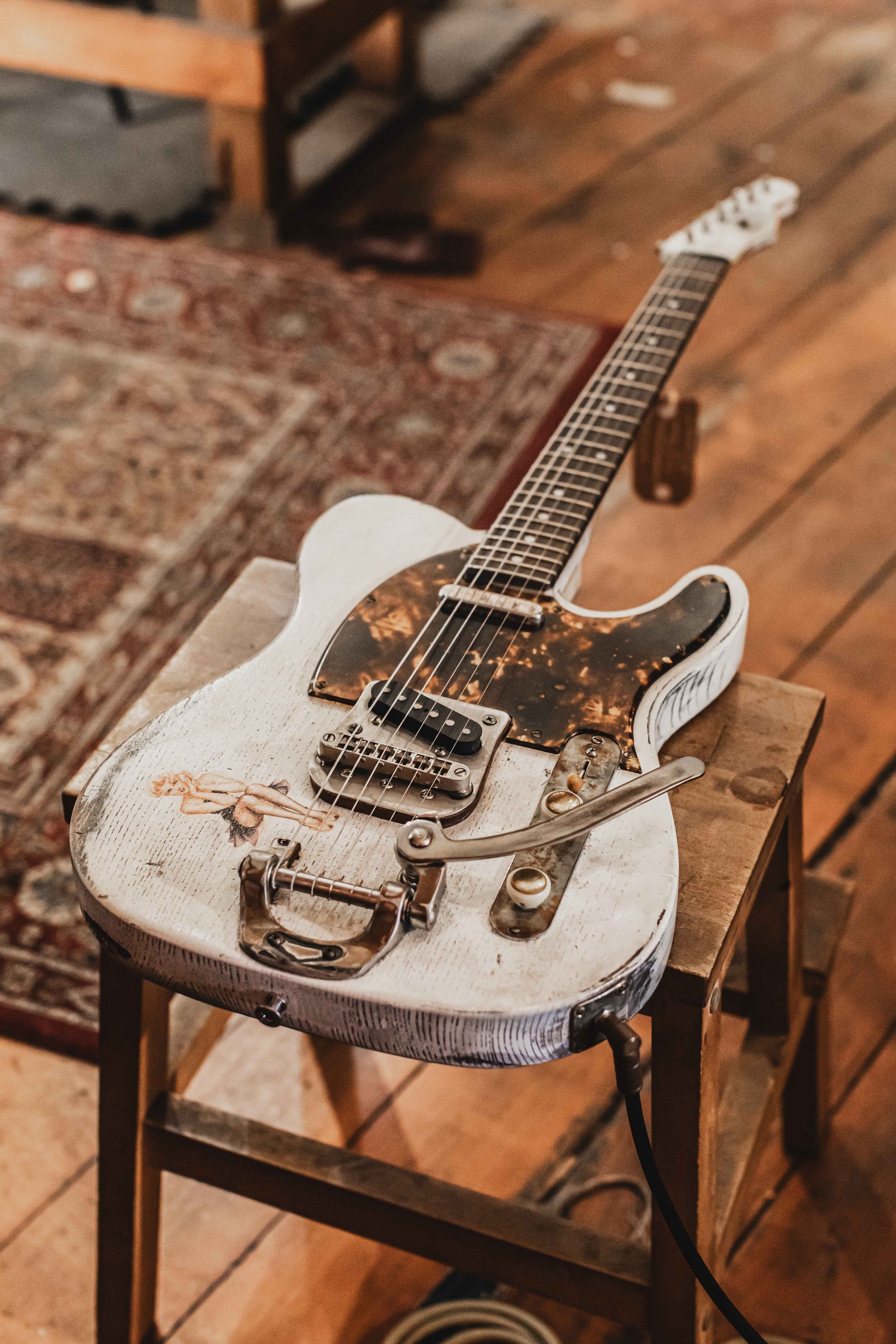
dscf8157_rs This baby is one of our famous wallpaper jobs and it doesn’t disappoint. A japanese cherry blossom wallpaper with a super schmicko vintage laquer paintjob, makes this Tele one of a kind. We also fitted it with custom made brass saddle pieces, vintage style machine heads and of course Alnico Fatbody Pickups.
This Tele is awesome and we don’t expect it to stick around for long.
Oh and the real Tele has knobs on it too, unlike these photo’s
$1950

Parlour Guitar 1910’s

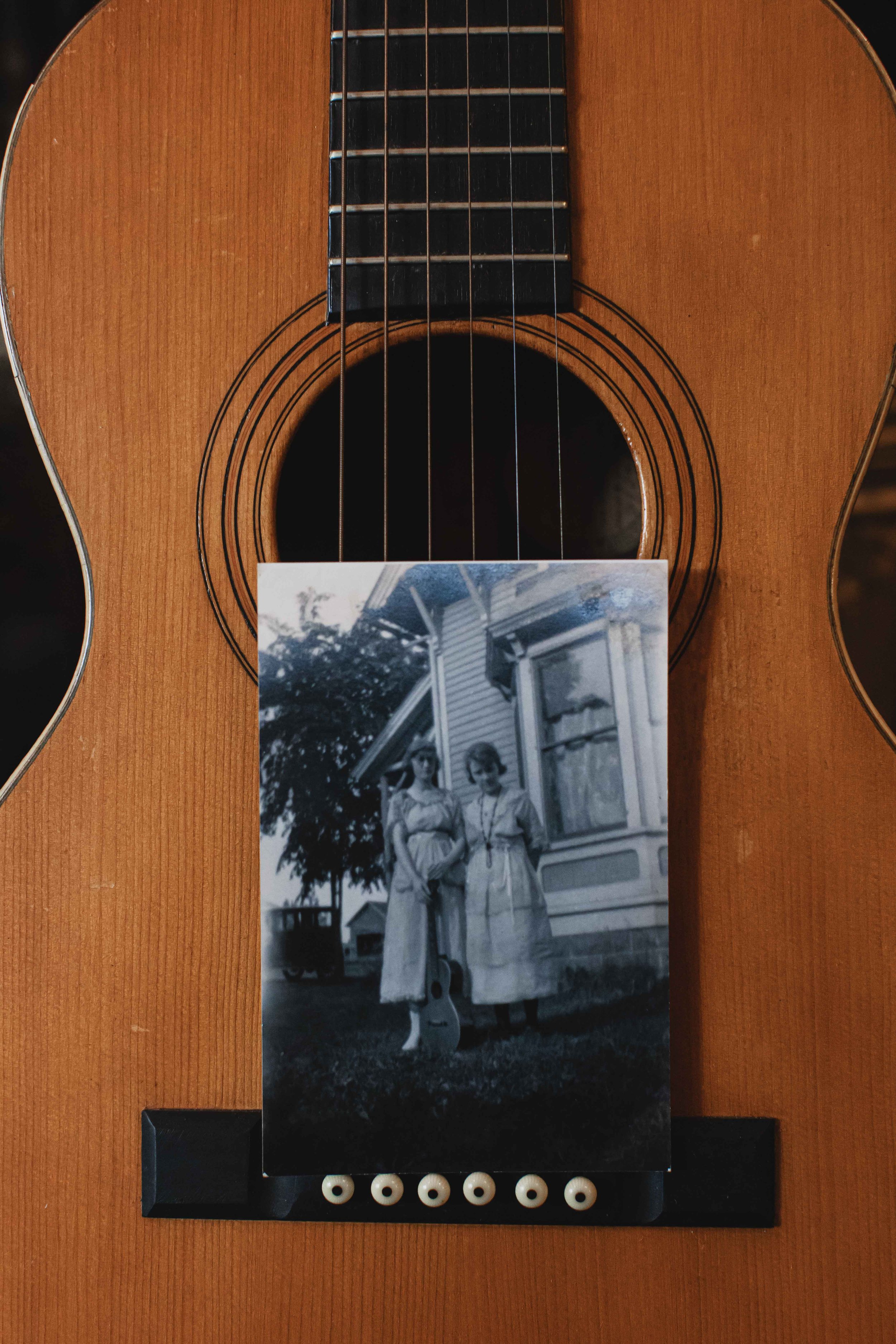
A parlour guitar from the decade of 1910. Yep we fully restored, repaired, re-braced, re-glued, re-sprayed, and reloaded this baby to a pristine condit, ready to re-use.

Come on in and have a play because the tone and resonance of this little beaut has to be heard to be believed.

Girlie Hotrod Guitar

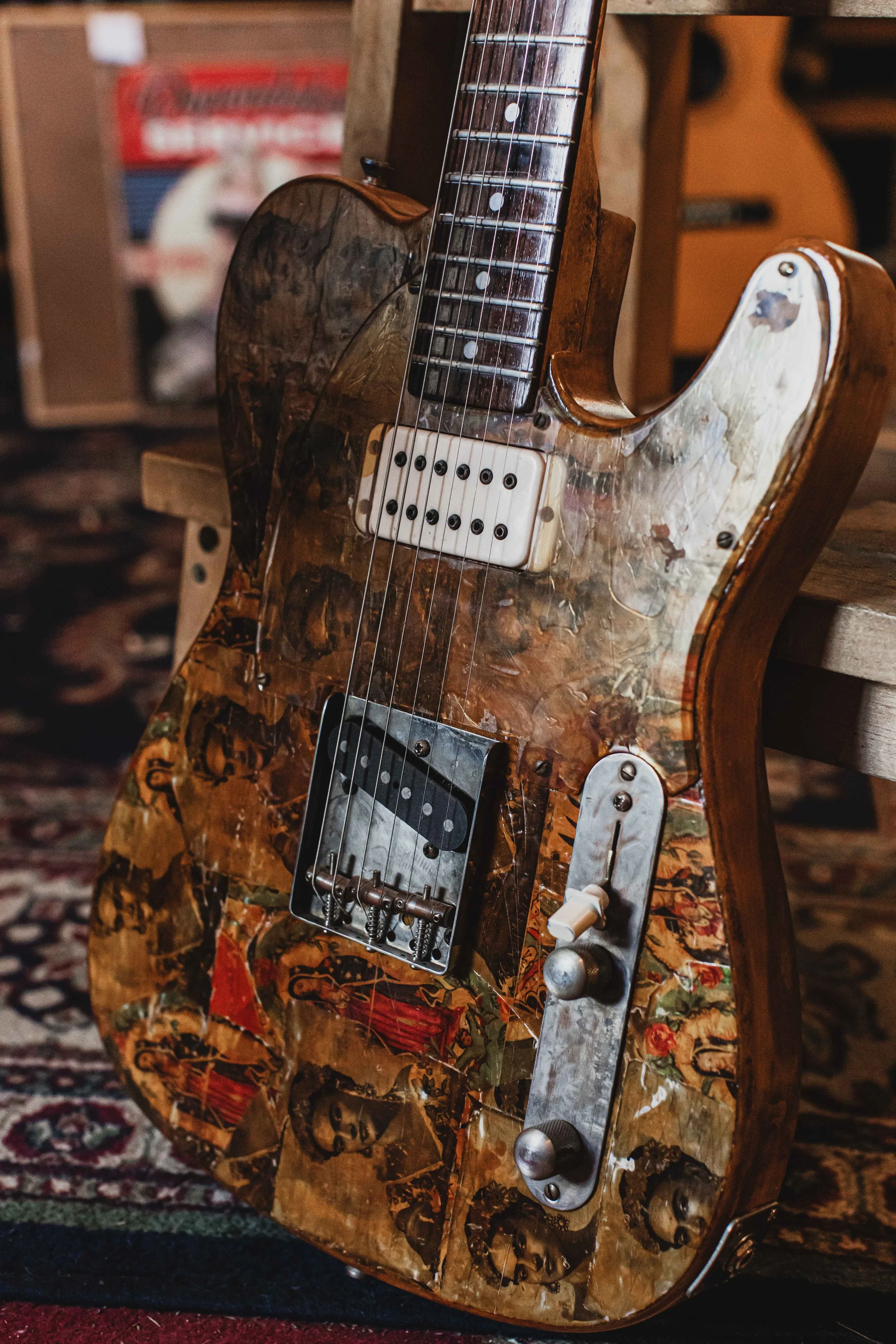
This one was an old semi acoustic that nobody loved. But now.. with a full restoration done by our qualified guitar “technicians” complete with a retro pinup girl wallpaper job under vintage lacquer tint, everybody will love it!

Oh and it sounds awesome too.

Gold Plated Harmony Parlor

An old harmony parlor guitar from 1934. Now, if that wasn’t enough cool for you to handle we thought we’d guild the front with gold leaf ‘yeah baby’ and if THAT was enough we even put a decal of a girl with turquoise hair on it.

Solid rosewood back and sides make it sound as good as it looks. Super bright, resonates while you go and grab a sandwich and is loud in every sense. One word, rad, man.

Back Bow Partial Refret

What is a Backbow Partial Refret?

Of all the repair and restoration work we do here Back-Bow Levels and Back Bow Partial Refrets would have to be one of the most common jobs.

We do a backbow partial refret if:

•    The first few frets are worn very low due to constant playing.
•    The angle of the neck to the body is too acute. So instead of resetting the neck, a back-bow partial refret is a cost   effective solution.
•     The neck is in a sharp up bow and it will take more than just a Backbow Level to fix the problem.
•    Necks warp and twist for a variety of reasons and if a backbow level is not enough then a backbow partial refret can be.

So here is what we do and how it works

•    We take the neck and tighten the truss rod slightly putting it into a backbow. Now, if we were to level the frets flat so that the 1st fret was as high as the 12th fret we would be filing the 12th fret down to nothing

backbow-diagram

To counter this we re-fret the first seven frets so that they can be  level. (The above diagram is exaggerated for clarity).

The benefits of Backbow Partial Refret are:

•    A lower action without any fret buzz
•    The strings will now play and sit at the correct angle to the body, giving a nice even action.
•    Longer fret life for those hard hitters.
•    The frets will all be nice and level.
•    A more even and accurate intonation.

So there you have it, ancient luthiery secrets finally exposed! If you are experiencing

•    Buzzing frets
•    “dead spots” on your guitar where the guitar plays the note in front of the fretted note
•    Flat spots or flat, worn frets
•    Uneven intonation
•    Super high action
•    “choking out” of the frets in the upper register

Then a Backbow Level or Backbow Partial Refret could be just what you need. So bring on in your guitar and we’ll be happy to have a looksie at it.

Uncle John’s Famour Tortoise Shell

Uncle John’s Famous Tortoise Shell

So our boys Matt and Luke got funky with some clear perspex and a host of nitro cellulose / stain mixtures to create the tortoise shell delights you see before you.
We even utilised the stuff in one of our banjo pick-up systems (see photo), with pleasing results.

Scratchplates and many other accessories are made to order. This is just a sample of what we can do.

We started creating our custom tortoise shell creations for a couple of reasons. Firstly, it is very difficult to import tortoise shell as it is flammable, and secondly we have been increasingly unhappy with the range of tortoise shell scratchplates available, we feel they just don’t do a fine classy instrument justice.

takamine12tort matoneg545tort johnsonstrattort harmonyuketort gibsonheritagetort

The Tone Bloc

dscf8084_rs

The Tone Bloc

These little beaut’s are made from Brazilian Bloodwood, yep you heard, Bloodwood, they sit underneath the bridgeplate, held in by the strings and can bring a dull guitar back to life. They amplify the mid range of the soundboard giving your guitar that extra 10% everyone is looking for. This particular one has a brass resonator piece in ‘er giving some much needed top end as well.

All that in one little piece of wood phew

What is a Bridgeplate

What is a bridge plate?????

The bridge plate is a flat piece of timber or in some cases (i.e. Maton guitars) a laminated piece of timber that is glued to the underside of the sound board directly under the bridge. Its primary function is to provide a strong anchor point by which the string tension is dispersed to the soundboard’s bracings and keep the soundboard flat in the area directly surrounding the bridge. Fact 1. Without the bridge plate the bridge would simply come away from the guitar and no amount of re-gluing would keep it on. Fact 2. Even the strongest bridge plate will wear over time as a result of many string changes and general wear and tear. Fact 3. The bridge plate is also a very crucial component tonally. If the bridge plate is worn, warped or delaminating, the string vibration will not resonate efficiently into the soundboard. A common complaint we hear is that of dead sound, muted or no midrange or lack of volume. By replacing or reinforcing the bridgeplate with the correct timber you can effectively bring back life into even a cheap guitar. See below for detailed pictures.

What is a bracing?????

The other important part of a soundboard’s reinforcement is the bracings or ribs. These also hold the soundboard flat under the tension of the strings. The X bracing is the largest of these and is as important to an acoustic guitar as the thigh bone is to your leg. Without these bracings (both large and small) the guitar would fall apart. They are also vibration distributors and in their own way serve a similar purpose as the bridge plate. See below for detailed pictures.

bridgeplate summary